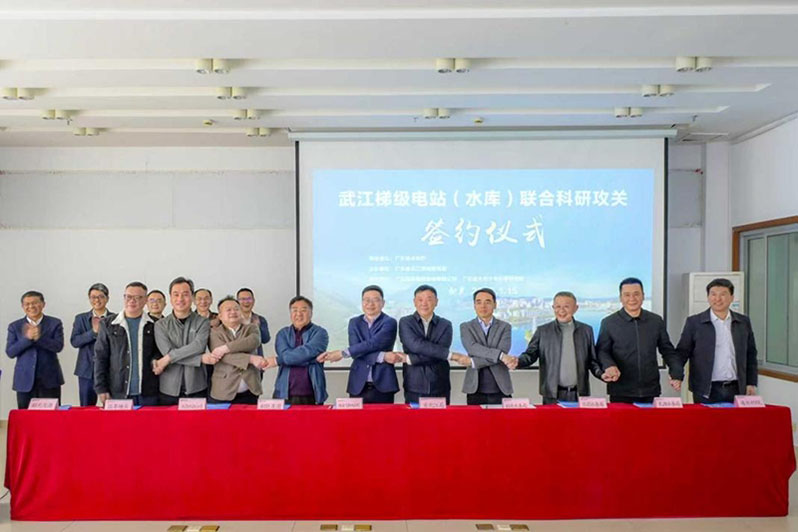
Signing Ceremony of Joint Scientific Research on Wujiang Cascade Hydropower Stations (Reservoirs) Held
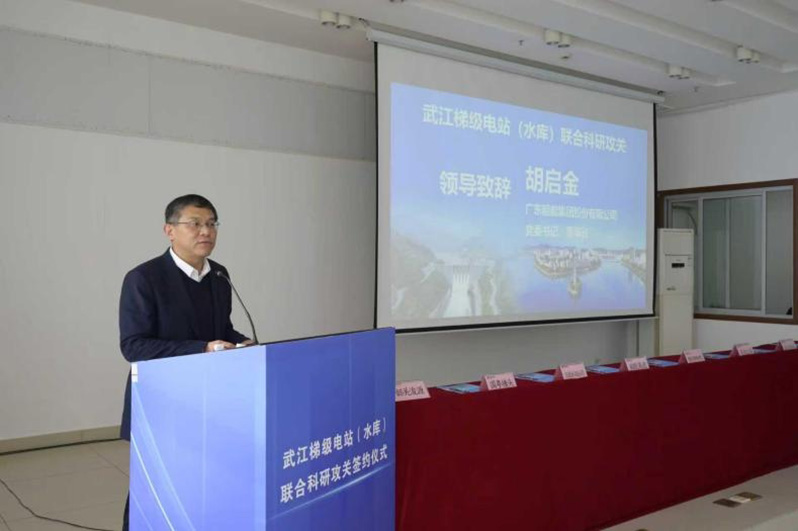
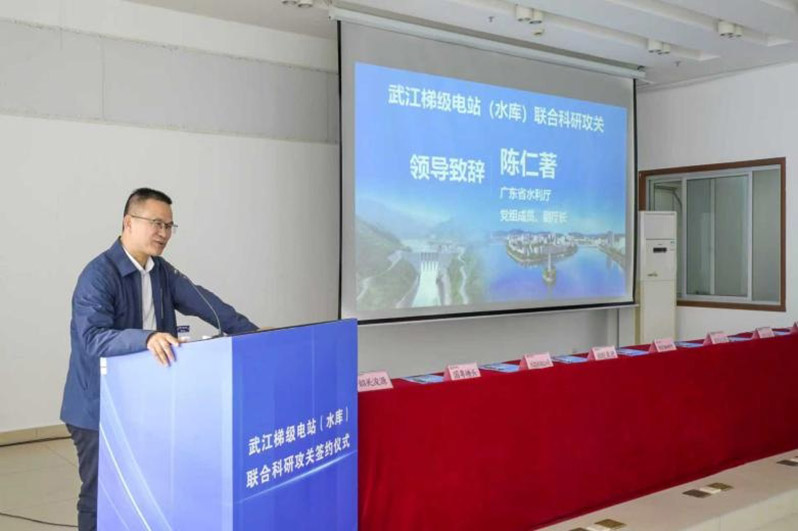
Recently, Shaoneng Group assisted Beijiang River Basin Administration of Shaoguan City in successfully holding the signing ceremony of joint scientific research on Wujiang Cascade Hydropower Stations (Reservoirs). This signing is not only a new starting point for all parties to deepen cooperation and concentrate efforts on key research, but also an important milestone for jointly improving the basin water security capacity and promoting water conservancy scientific and technological innovation. Chen Renzhu, Member of the Party Leadership Group and Deputy Director of the Department of Water Resources of Guangdong Province, relevant leaders of the Department of Water Resources, Hu Qijin, Chairman of Shaoneng Group, Zhu Yunshao, Deputy General Manager of Shaoneng Group, and representatives of all cooperative units attended the signing ceremony.
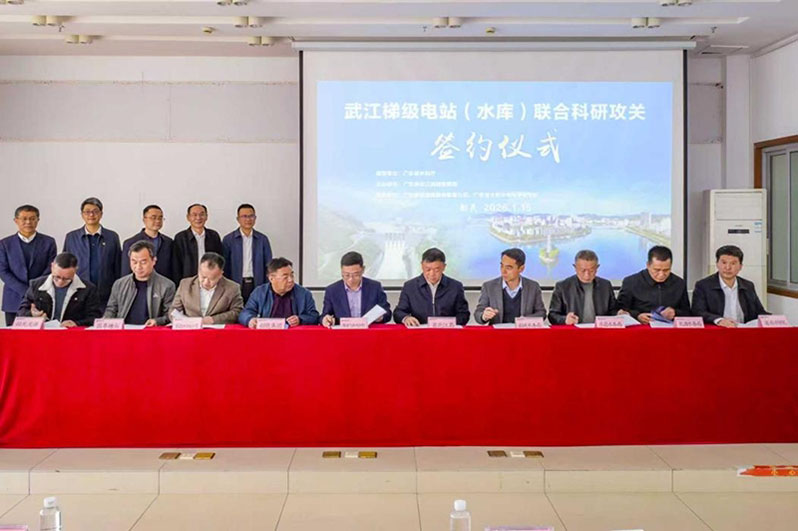
The joint scientific research project of Wujiang Cascade Hydropower Stations (Reservoirs) is led by Beijiang River Basin Administration of Shaoguan City, jointly promoted by local water administrative departments including Shaoguan City, Lechang City and Ruyuan County, 7 hydropower stations (reservoirs) on the main stream of Wujiang River and Guangdong Research Institute of Water Resources and Hydropower. It aims to systematically improve the utilization level of flood resources in the main stream of Wujiang River and the comprehensive benefits of cascade projects.
The project innovatively constructs a new government-enterprise joint scientific research model of "platform built by basin administrations, investment by enterprises, contribution by scientific research institutes, benefit sharing and return from gains". Focusing on the key issues affecting the comprehensive efficiency improvement of Wujiang Cascade, taking the resource utilization of medium and small floods in flood season and water recession period as the entry point, the project systematically carries out research on joint optimal operation of reservoir groups for flood control and power generation, builds a scientific and practical technical system of joint optimal operation, comprehensively improves the flood defense capacity and water resource utilization efficiency of Wujiang Basin, and achieves win-win results and sustainable development for all parties.
The implementation of the joint scientific research project of Wujiang Cascade Hydropower Stations (Reservoirs) is not only a concrete action to thoroughly implement the deployment of the Ministry of Water Resources on strengthening the joint operation of basin water projects and promoting the research on flood resource utilization, but also a key measure to serve the development of water economy in the basin and improve the comprehensive value of water resources. It will also provide an important practical sample for building an advanced and practical water conservancy scientific and technological support system for Beijiang Basin and exploring a sound development mechanism of "innovation-driven benefits and benefits feeding innovation".
In the next step, Beijiang River Basin Administration will closely cooperate with all member units, focus on the two cores of water resource utilization and improvement of cascade comprehensive benefits, fully promote the project implementation and achievement transformation, build a long-term working mechanism, strive to create a demonstration "Beijiang Model" of basin joint operation and scientific and technological innovation, and continuously stimulate the vitality of water conservancy scientific and technological innovation to inject strong impetus into regional water security and high-quality economic and social development.
Shaoneng Group signed an agreement with Beijiang River Basin Administration to participate in the joint scientific research of Wujiang Cascade Hydropower Stations (Reservoirs), which will help the hydropower stations under Shaoneng Group in Wujiang Basin integrate resources, optimize joint operation, upgrade technology and reduce costs, improve ecological benefits, promote policy compliance and strengthen risk prevention and control.